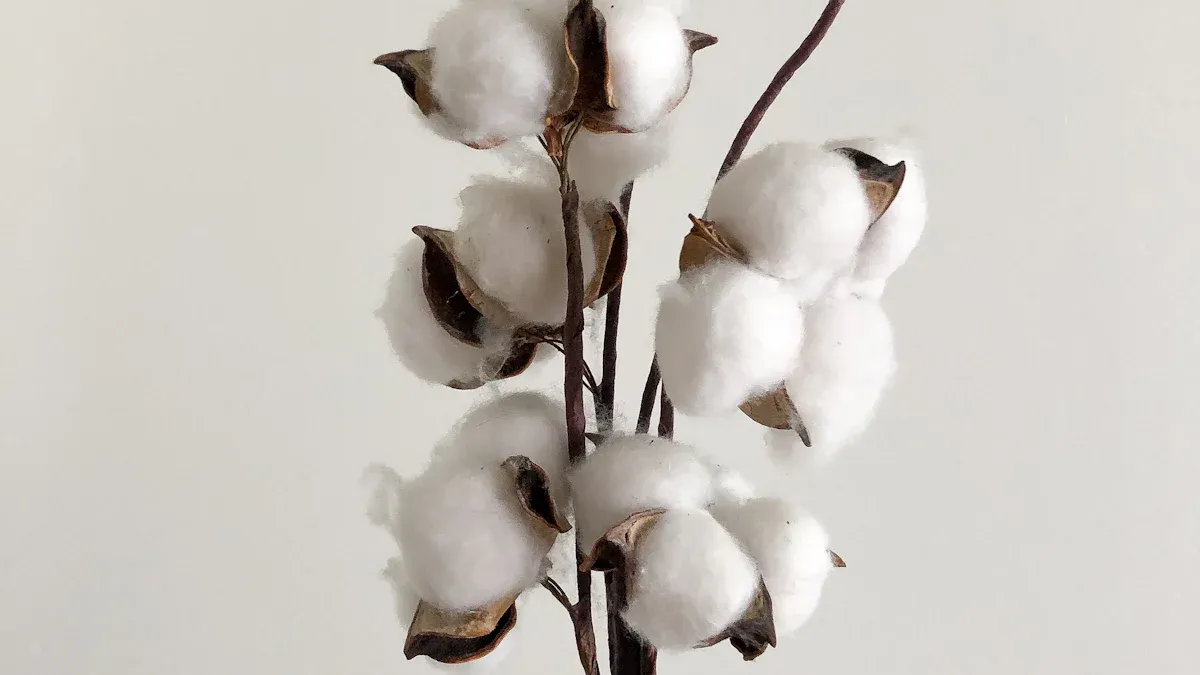
Organic cotton fabric is easy to identify if you look for trusted certifications like GOTS, OEKO-TEX, or USDA Organic. Since only about 1.4% of all cotton worldwide is certified organic, it’s important to know what to look for when shopping for organic cotton fabric.
- Check for labels that state “100% organic coloured cotton” to ensure you’re getting genuine organic cotton fabric.
- Examine the material closely. Authentic organic cotton fabric shouldn’t appear overly shiny or too dull.
- Try a burn test at home—real organic cotton fabric burns slowly and produces black smoke.
- Feel the fabric. True organic cotton fabric should be soft, comfortable, and breathable.
Following these steps will help you avoid misleading claims and make sure you’re purchasing real organic cotton fabric.
Key Takeaways
- Check for trusted certifications like GOTS, USDA Organic, or OEKO-TEX. These help you know if the cotton is really organic.
- Try easy tests at home, like the touch and burn tests. These can help you see if the fabric is real.
- Look at how the fabric looks and feels. Real organic cotton is soft and lets air through. It might have small natural flaws.
- Look up brands and their supply chains. This helps you see if they really use organic cotton and do not make false claims.
- Ask store workers where their cotton comes from and what certifications they have. This helps you choose the right fabric.
Organic cotton fabric certifications
GOTS and USDA Organic labels
The Global Organic Textile Standard (GOTS) and USDA Organic are trusted certifications for organic cotton fabric. These labels show if a product meets strict organic rules.
GOTS Certification
GOTS checks every step of making organic cotton fabric. It looks at how cotton is grown and how the fabric is made. GOTS also checks for good treatment of people and the planet. To get GOTS certified, products must follow many rules:
| Requirement | Description |
|---|---|
| Minimum Organic Fiber Content | At least 70% of fibers must be organic. |
| Due Diligence Requirements | Companies must look for risks to people and nature in their supply chains. |
| Pesticide Residue Testing | Cotton is tested for GMOs and pesticides before making fabric. |
| Annual Inspections | Certified places must have inspections every year. |
| Certificate Validity | Certificates must be renewed before they expire. Inspections happen at least 60 days before. |
| Implementation Deadline | All new GOTS Version 7.0 rules must be used by March 1, 2024. |
USDA Organic Certification
USDA Organic checks the cotton crop only. It makes sure cotton grows without GMOs, fake fertilizers, or pesticides. USDA Organic does not check how cotton turns into fabric. So, chemicals might still be used when making the fabric.
How to Recognize the Labels
Look for these logos on tags or labels:
- GOTS Standard logo
- USDA Certified Organic logo
Real products often show one or both certifications.
Tip: GOTS checks the whole process. USDA Organic only checks how cotton is grown.
OEKO-TEX and other marks
OEKO-TEX is another label found on cotton fabrics. It checks for harmful chemicals in products. It does not require cotton to be organic.
Here is a comparison between OEKO-TEX and GOTS:
| Aspect | OEKO-TEX Standard 100 | GOTS (Global Organic Textile Standard) |
|---|---|---|
| Certification Scope | Checks for harmful chemicals in products | Covers environmental and social standards |
| Fiber Eligibility | Any fiber type | Only organic natural fibers |
| Environmental Standards | Optional programs | Mandatory standards |
| Labeling | Product Classes I–IV | Based on organic fiber content |
Other good certifications include:
- Organic Content Standard (OCS): Checks organic fiber content and tracks supply chains. It does not check social or environmental rules as much as GOTS.
Note: OEKO-TEX and OCS help you find safer or traceable cotton. Only GOTS and USDA Organic prove the cotton is truly organic.
How to spot fake or missing certifications
Some products say they are organic but do not have proof. Here are ways to check if a certification is real:
- Label Check: Look for the GOTS or USDA Organic logo on tags or packages.
- Scope Certificate: Ask for or search for a Scope Certificate. This paper lists all certified companies in the supply chain.
- Certification Details: Check if the product shows the class level and how much organic content it has.
- Online Databases: Go to the GOTS website. Search for the brand or product to confirm certification.
If a label is unclear or you cannot find the product online, it may not be certified. Always look for clear, official logos and certificates.
Tip: Real certifications are easy to check online. If you cannot find proof, pick a different product.
Inspecting 100% organic cotton fabric
Visual and texture clues
100% organic cotton looks and feels special. When you touch it, it feels much softer than regular cotton. The fabric is light and lets air through easily. This soft feeling comes from how it is picked and made. People pick the cotton by hand. This keeps the fibers strong and smooth. 100% organic cotton does not feel stiff or scratchy.
Here are some ways to spot 100% organic cotton by looking and touching:
- The fabric feels very soft and smooth.
- It is lighter and more breathable than regular cotton.
- You might see tiny bumps or uneven threads.
- The weave looks natural, not too shiny or perfect.
Tip: If the fabric feels rough or looks shiny like plastic, it is probably not 100% organic cotton.
Natural imperfections and color
100% organic cotton often has small marks or bumps. These can be tiny specks or uneven threads. These things show the fabric is not changed much. Regular cotton looks very smooth because machines and chemicals remove these marks.
Color is another clue. 100% organic cotton usually has soft color changes. The color can look creamy, off-white, or gentle. This is because it uses dyes from natural things like clay. These dyes do not have heavy metals. Sometimes, 100% organic cotton is light brown or green. These are natural colors for cotton.
- 100% organic cotton has natural bumps and marks.
- The color is soft, not bright white.
- Dyes come from nature, not chemicals.
Note: If the fabric is bright white or has strong colors, it was probably treated with strong chemicals. This is not common for 100% organic cotton.
Comparing with regular cotton
There are big differences between 100% organic cotton and regular cotton. Regular cotton does not feel as soft and can be stiff. Machines pick regular cotton, which can break the fibers. Chemicals used in regular cotton can stay on the fabric. These can cause skin problems. 100% organic cotton is safer for people with sensitive skin.
Here is a simple chart:
| Feature | 100% Organic Cotton | Regular Cotton |
|---|---|---|
| Texture | Very soft, smooth, breathable | Can be rough, stiff, less breathable |
| Imperfections | Shows natural bumps and specks | Usually very even and smooth |
| Color | Soft, creamy, or natural shades | Bright white or bold colors |
| Dye Type | Low-impact, natural dyes | Synthetic dyes, may have heavy metals |
| Durability | Strong fibers, lasts longer | Fibers may be weaker, pills faster |
| Skin Safety | Less likely to cause allergies | May cause irritation |
- 100% organic cotton lasts longer because the fibers are strong.
- The fabric does not pill and keeps its shape.
- Making 100% organic cotton is better for the earth.
If you choose 100% organic cotton, you get a fabric that is soft, safe, and lasts a long time. You also help the planet.
Easy ways to tell if cotton is organic
The touch and burn tests
There are simple ways to check if cotton is organic at home. The touch test is easy to do. Organic cotton feels much softer than other cotton. It is light and lets air move through it. This keeps you cool in summer and warm in winter. People with allergies or sensitive skin like organic cotton. It does not make their skin itch.
The burn test is another way to check fabric. Cut a small piece of the fabric first. Hold it with tweezers in a safe place with fresh air. Keep it away from things that can catch fire. When you burn organic cotton, it burns fast and smells like paper. The ash left is soft and gray. This means the fabric is probably pure cotton.
| Test | What to Look For | Safety Tip |
|---|---|---|
| Touch | Soft, breathable, gentle | No safety risk |
| Burn | Burns fast, paper smell, soft ash | Use tweezers, ventilate area |
Always be careful when you do a burn test. Never burn fabric near things that can catch fire.
Water absorption check
Water absorption is another easy way to check for organic cotton. Organic cotton soaks up water very fast. Put a drop of water on the fabric. If it soaks in quickly, it is likely organic cotton. Tests show organic cotton takes in more water than regular cotton. This is true even after many washes. For example, organic cotton terry cloth can soak up over 4 grams of water for every gram of fabric. Regular cotton soaks up less and loses this ability after washing.
- Organic cotton soaks up water fast.
- Regular cotton and blends may not soak up water as well.
Quick label and brand research
A little research can help you know if cotton is really organic. Look for trusted labels like GOTS or OCS on the tag. These labels mean the fabric meets strict rules. You can check the Global Organic Textile Standard website to see if a brand is certified. Many brands show their certifications online. Reviews and forums can help you find good brands.
GOTS is the best label for organic cotton. It checks farming and making the fabric. It makes sure products follow good rules for people and the earth.
- Check brands and makers before you buy.
- Look for clear supply chain and certifications.
- Use public websites to check if claims are true.
Avoiding false organic cotton claims
Spotting greenwashing
Many brands try to look eco-friendly when they are not. Greenwashing is when companies use words or pictures that sound good but are not true. Some brands use tricks like these:
- They use unclear or tricky words on ads and labels.
- They say products are “natural” but do not explain how.
- They talk about one good thing but hide bad things.
For example, some brands say they use eco-friendly materials but really use genetically changed crops or bad chemicals. These tricks make it hard to know if cotton is really organic. Always check labels and look for real certifications.
Tip: If a product says “eco” or “green” but does not say why, it might not be real organic cotton.
Questions to ask retailers
Smart shoppers ask questions before they buy. This helps you find out if cotton is organic and why organic cotton is better. You can ask things like:
- Where is your cotton from?
- Is the cotton from genetically changed seeds?
- What certifications does this product have?
- Can you show proof of certification?
- How do you keep your supply chain green?
- What are your earth-friendly actions?
You can also ask if the store recycles or uses green packaging. These questions help you learn why organic cotton is good, like safer farming and better soil.
Researching supply chains
It is important to check the supply chain if you want to find real organic cotton. Many brands now use digital tools like QR codes or blockchain to show where their cotton comes from. These tools help you see the path from farm to store. Brands that care about organic cotton often share details about their farming, making, and shipping.
- Look for brands with GOTS or OCS labels.
- See if the brand uses tracking systems.
- Read about their farming, like crop rotation and composting.
Brands that share their supply chains are more trustworthy. They show why organic cotton is good, like helping the earth and treating workers fairly.
To find organic cotton fabric, look for trusted certifications. Check how the fabric looks and feels. You can do easy tests at home. Research brands and labels to make sure they are real. Smart shoppers pick real organic cotton. This helps protect the environment.
Remember: These steps help you avoid fake claims. They also help you make choices that are good for your health and the planet. Your choices matter.
FAQ
What makes organic cotton different from regular cotton?
Organic cotton grows without bad chemicals. Farmers use natural ways to keep soil and water safe. This keeps the cotton clean. Organic cotton feels softer than regular cotton. It is better for people with sensitive skin. Many people like organic cotton because it feels gentle.
How can I be sure I am buying real organic cotton products?
Look for trusted certifications on the label. Find GOTS or USDA Organic marks. These show the product follows strict rules. You can search for brands online. Real organic cotton products share supply chain and farming details.
Why do organic cotton products cost more?
Organic cotton needs careful farming. Farmers do not use chemicals and work harder. This takes more time and effort. The higher price helps pay workers better and keeps farms safe. Many people think organic cotton is worth the extra cost for health and the planet.
Can organic cotton be dyed in bright colors?
Most organic cotton uses natural dyes. These dyes make soft, gentle colors. Bright colors are not common in organic cotton. If you see bright shades, check if it meets organic standards. Natural dyes help keep organic cotton safe for skin and nature.
Are organic cotton products better for the environment?
Yes, organic cotton helps protect nature. Farmers use less water and skip toxic sprays. This keeps soil healthy and animals safe. Many people pick organic cotton to help clean air and water. Choosing organic cotton helps the planet and future generations.